

First Impressions
"...immeasurable human suffering, a mixture of tenderness and insane courage..."

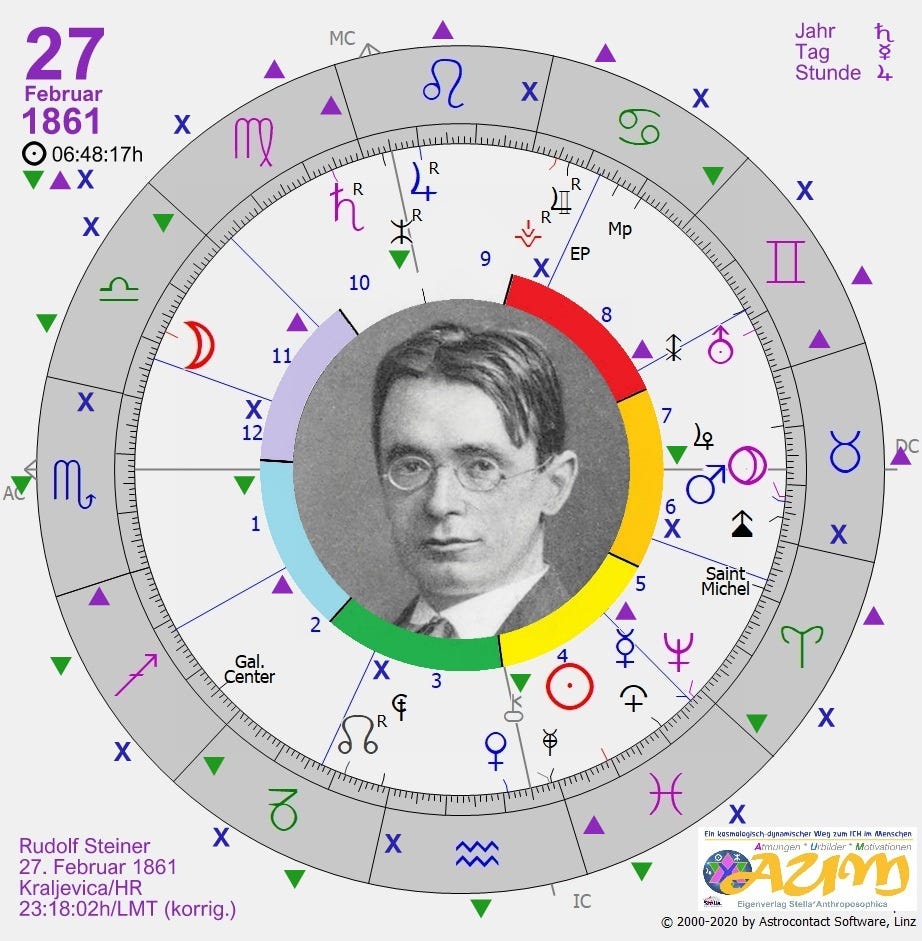
Greetings Friends TODAY I share some ‘Reminiscences of Rudolf Steiner’ on his Baptism Birth-day - from a letter written by Andrei Belyi to fellow Russian Symbolist Poet Aleksadnr Blok.
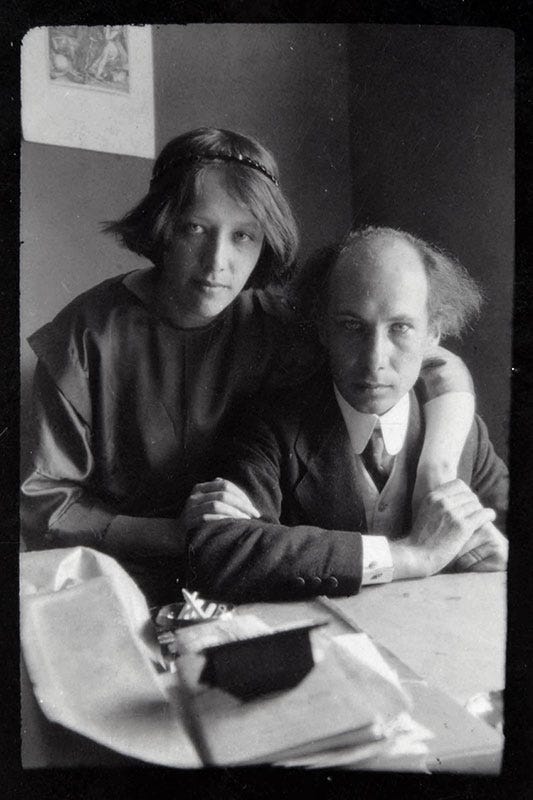
“The day is stormy, muggy: through the windows is the huge, lacey Cologne Cathedral. We go out, take a cab – drive along the bank of the Rhine…We search for the entrance, we ring: a little shell of an old woman – an “auntie,” pale, emaciated, but with kind eyes – comes out. We hesitate – we hand over the letter. Another woman, approaching her middle years, comes toward us and says in perfect Russian: “Are you here to see the Doctor? You are here from that Moscow circle, which … “ etc. She turns out to be a Russian, Mariya Yakovlevna, and Marie von Sivers, the Doctor’s secretary, who had been inseparable from him for many years. “Wait.” – We wait. Sivers returns and says: “Although you are not members of the Lodge, the Doctor will make an exception, and he invites you to a session of the Lodge in two hours. The Doctor will grant you an audience afterwards – today or tomorrow.”
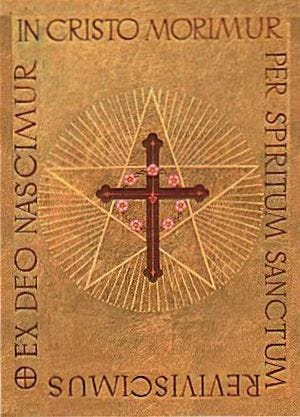
In two hours we return: the rooms are filled with people; they show us into an oblong hall of a dark blue color: everywhere on the doors and windows are dark blue curtains: in the front there is a dais; in the recess of the wall is a huge cross; on it, a garland of red roses; on the table a huge bouquet of the same kind of roses; above, a gold sign and the initials of a motto. The hall is full of “aunties” and gentleman; very significant faces appear for a moment and then disappear, the majority of them are “aunties.”
We squeeze in and sit down near the side door. We wait. The curtain in the doorway moves apart, but behind the curtain the room is empty: Steiner is about to come in. A terrible unrest, anxiety grips me for some reason - as if someone is looking through me; I turn toward the door and for a minute I have a fleeting glimpse of the edge of the cheek of some face – but the edge of the cheek is transparent, illuminated, and I know it is Steiner, but the edge of the cheek of the face has already disappeared (later Assya, who had been staring at the door the whole time told me that for a moment Steiner, whom she also saw transparent and illuminated, (in the literal sense), appeared at the door: he looked at us – at the same time that I sensed the inexplicable unrest – and he had disappeared, so that I caught sight of only the edge of his cheek.
Steiner’s first appearance was, for both of us, an illuminating phenomenon, in the literal, not the figurative sense; but the illuminating phenomenon disappeared.
In about 3 minutes, Steiner (no longer an illuminating phenomenon), small, reserved, sharply refined, ascended to the platform and began to speak: what he said – could fill up ten pages writing about that, (but you still can’t write everything). Steiner speaks crossly, reservedly, in a bass voice; at times he begins to shout, at times his voice sings like velvet, but he speaks in such a way that every word twists itself into your soul, leaving an indelible mark. Everyone whom I have ever heard is a puppy compared to Steiner, in the purely external ability to speak beautifully; at times Steiner flings the palms of his hands at his listeners, and from the gesture of the palms, you almost feel a physical slap in the face. On his face, a face breaks apart, and from there, another looks out, in order to set free a third face, the second one having broken apart in its turn.
In the course of the lecture, (Raphael’s Schule von Athen) ten Steiners pass before me, one proceeding from the other, one not resembling the other, yet they were penetrated with some kind of Unity. In the course of the lecture, he was a Spaniard, Sebastian Brant, (the German humanist & satirical poet) a Catholic Cardinal, a grammar school teacher, and a northern folk hero.
The strength and power of his glance were such that I have never seen on anyone. Surrounding him – illuminating rays; on his chest swims an illuminated cloud, changing colors: Assya and I saw the change in color at one and the same instant. His aura is unbelievable, and always almost visible, but at points of tension in his talk, it becomes blinding (I don’t know if you see the aura – already more than a year ago, I began to see it at times). In his face there is often an immeasurable human suffering, a mixture of tenderness and insane courage. Such was the first impression.”
~Andrei Bely

27 February 2025 – “Speaking with the Stars”

ON THIS DAY IN HISTORY
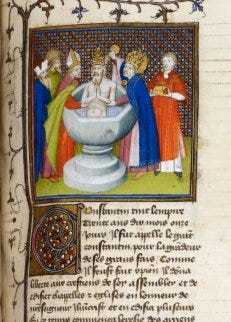
272 – Birthday of Constantine the Great, Roman emperor
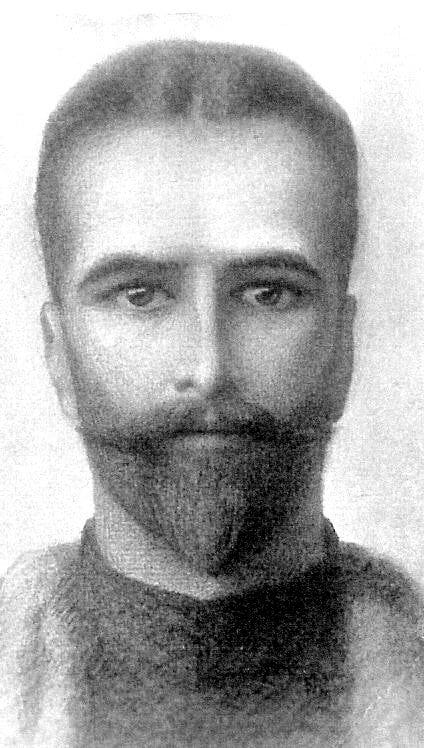
27 February is the Death-Day in 277 of Mani – the Highest Initiate – AND the Death-Day of Comte de St. Germain in the German town, Eckernförde, 1784.
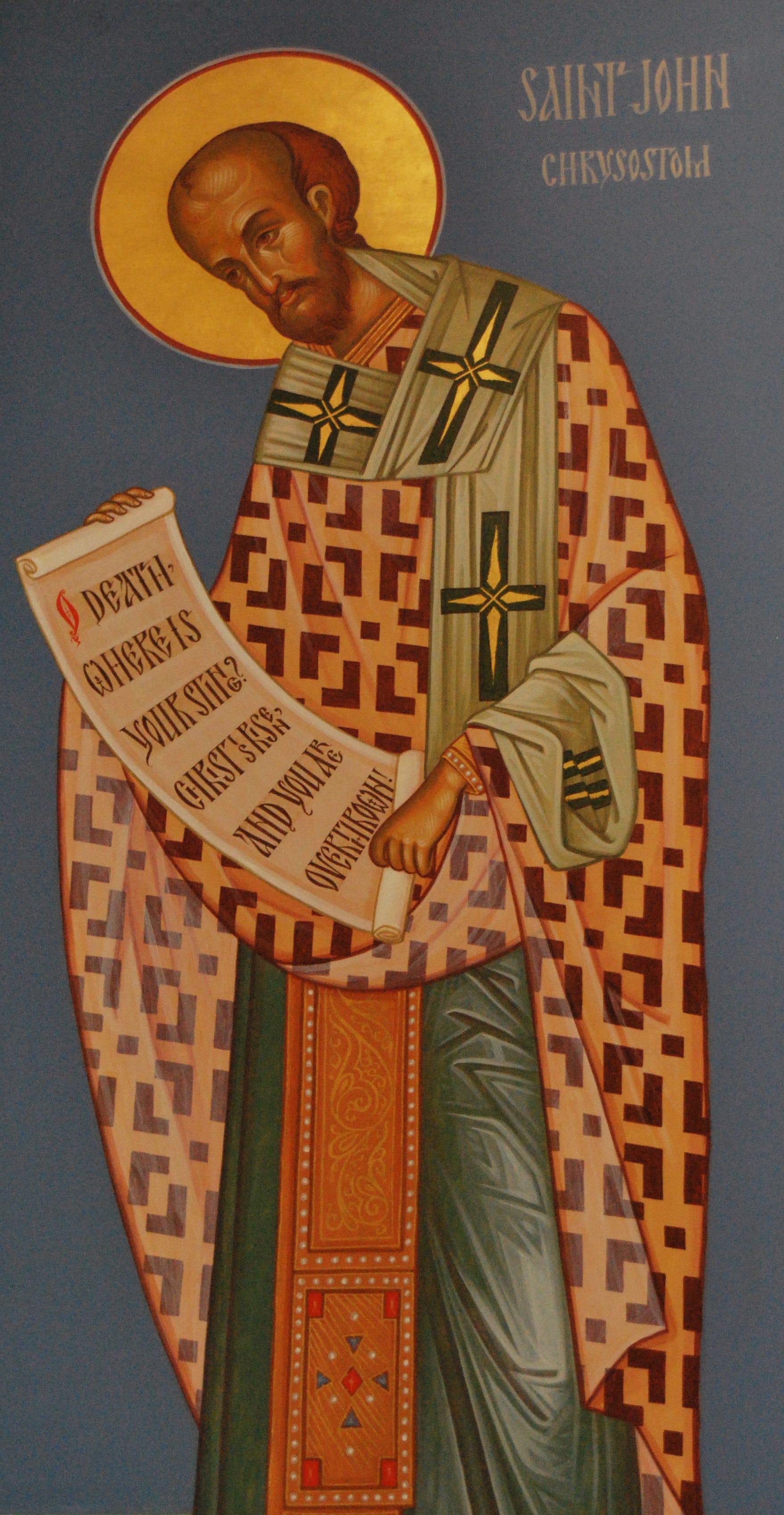
407 – Deathday of St. John Chrysostom, Archbishop of Constantinople, was an important Early Church Father. He is known for his preaching & public speaking, his denunciation of abuse of authority by both ecclesiastical & political leaders, the Divine Liturgy of St. John Chrysostom, & his ascetic sensibilities. The epithet Χρυσόστομος (Chrysostomos, anglicized as Chrysostom) means “golden-mouthed” in Greek & denotes his celebrated eloquence. Chrysostom was among the most prolific authors in the early Christian Church exceeded only by Augustine in the quantity of his surviving writings. John was born in Antioch in 349 to Greco-Syrian parents. His mother Anthusa as a pagan & his father was a high-ranking military officer. John’s father died soon after his birth & he was raised by his mother. As a result of his mother’s influential connections in the city, John began his education under the pagan teacher Libanius. From Libanius, John acquired the skills for a career in rhetoric, as well as a love of the Greek language & literature.
A late medieval legend relates that, when John Chrysostom was a hermit in the desert, he was approached by a royal princess in distress. The Saint, thinking she was a demon, at first refused to help her, but the princess convinced him that she was a Christian & would be devoured by wild beasts if she were not allowed to enter his cave. He therefore admitted her, carefully dividing the cave in two parts, one for each of them. In the morning she had given birth to a child she claimed was his. He then went to Rome to beg absolution, which was refused. Chrysostom made a vow that he would never rise from the ground until his sins were expiated, & for years he lived like a beast, crawling on all fours & feeding on wild grasses & roots. One day the princess reappeared, suckling the saint’s baby, who miraculously pronounced his sins forgiven. This last scene was very popular from the late 15th century onwards as a subject for engravers & artists.
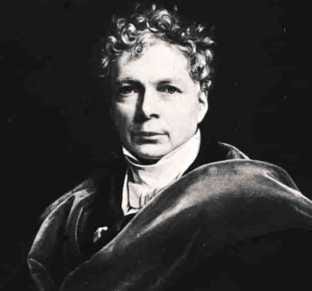
1775 – Birthday of Friedrich Wilhelm Joseph Schelling, a German philosopher. Standard histories of philosophy make him the midpoint in the development of German idealism, situating him between Johann Gottlieb Fichte, his mentor in his early years, & Georg Wilhelm Friedrich Hegel, his former university roommate, early friend, & later rival. Some later philosophers such as Martin Heidegger & Slavoj Žižek have shown interest in re-examining Schelling’s body of work. Quotes:
“Nature is visible Spirit; Spirit is invisible Nature.” (Ideen, “Introduction”)
“History as a whole is a progressive, gradually self-disclosing revelation of the Absolute.” (System of Transcendental Idealism, 1800)
“Has creation a final goal? And if so, why was it not reached at once? Why was the consummation not realized from the beginning? To these questions there is but one answer: Because God is Life, and not merely Being.” (Philosophical Inquiries into the Nature of Human Freedom, 1809)
“Only he who has tasted freedom can feel the desire to make over everything in its image, to spread it throughout the whole universe.” (Philosophical Inquiries into the Nature of Human Freedom, 1809)
“As there is nothing before or outside of God he must contain within himself the ground of his existence. All philosophies say this, but they speak of this ground as a mere concept without making it something real and actual.” (Philosophical Inquiries into the Nature of Human Freedom, 1809)
“God then has no beginning only insofar as there is no beginning of his beginning. The beginning in God is eternal beginning, that is, such a one as was beginning from all eternity, and still is, and also never ceases to be beginning.” (Quoted in Hartshorne & Reese, Philosophers Speak of God, Chicago: U of Chicago P, 1953, p. 237.)
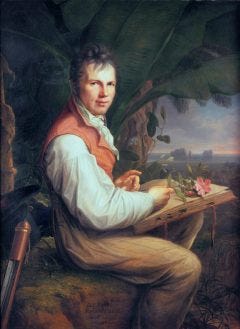
1807 – Birthday of Henry Wadsworth Longfellow
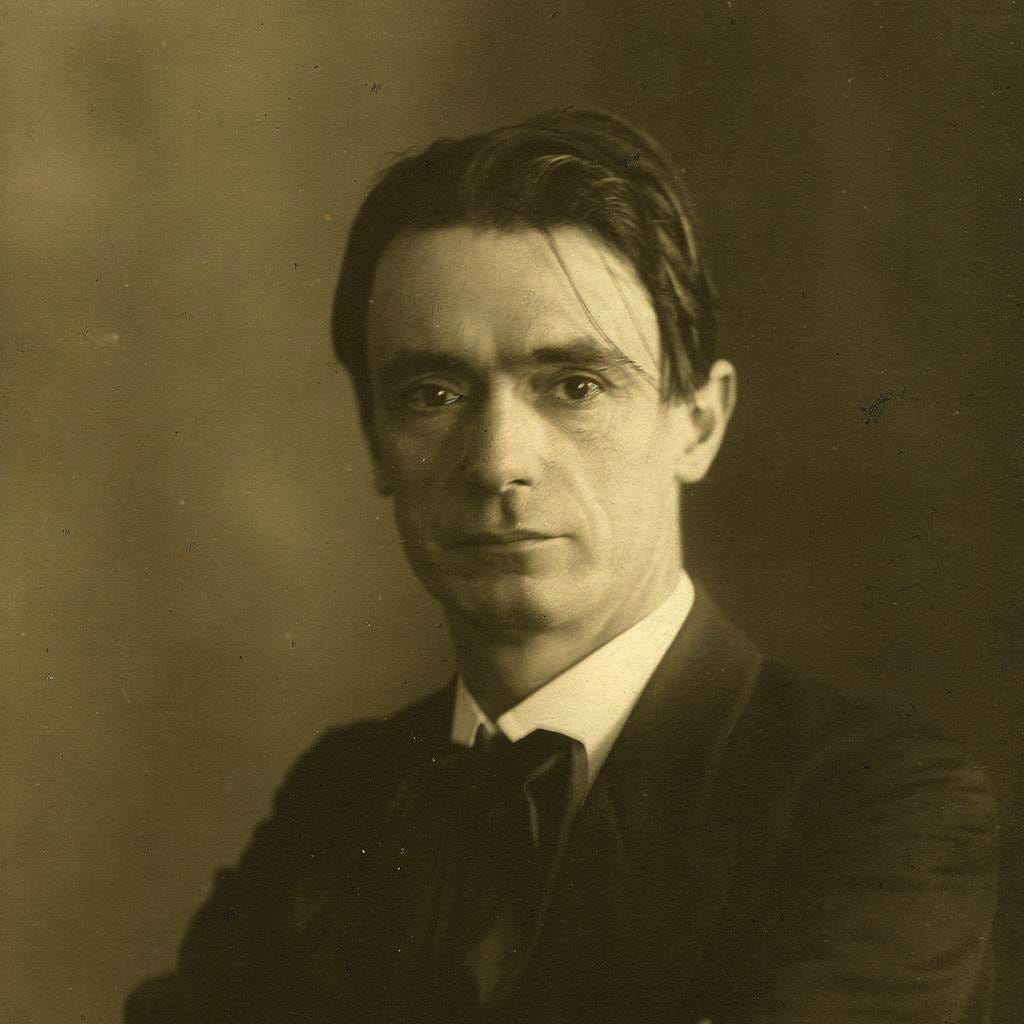
1861 – The emergency Baptism of Rudolf Steiner
1901 – Deathday of Giuseppe Fortunino Francesco Verdi an Italian opera composer. Verdi was born near Busseto to a provincial family of moderate means, & developed a musical education with the help of a local patron. Verdi came to dominate the Italian opera . In his early operas Verdi demonstrated a sympathy with the Risorgimento movement which sought the unification of Italy. He also participated briefly as an elected politician. An intensely private person, Verdi however did not seek to ingratiate himself with popular movements & as he became professionally successful was able to reduce his operatic workload & sought to establish himself as a landowner in his native region. He surprised the musical world by returning, after his success with the opera Aida (1871), with three late masterpieces: his Requiem (1874), & the operas Otello (1887) &Falstaff (1893). His operas remain extremely popular, especially the three peaks of his ‘middle period’: Rigoletto, Il trovatore & La traviata.
1922 – A challenge to the 19th Amendment to the United States Constitution, allowing women the right to vote, is rebuffed by the Supreme Court
1939 – United States labor law: The U.S. Supreme Court rules that sit-down strikes violate property owners’ rights & are therefore illegal
2004 – The initial version of the John Jay Report, with details about the Catholic sexual abuse scandal in the United States, is released. The report determined that, during the period from 1950 to 2002, a total of 10,667 individuals had made allegations of child sexual abuse. Of these, the dioceses had been able to identify 6,700 unique accusations against 4,392 clergy over that period in the USA, which is about 4% of all 109,694 ordained clergy i.e. priests or deacons or members of religious orders, active in the USA during the time covered by the study. Roughly 4% of them were accused. However, of these 4392 accused, only 252 (5.7% of those accused or less than 0.1% of total clergy) were convicted. The number of alleged abuses increased in the 1960s, peaked in the 1970s, declined in the 1980s, & by the 1990s had returned to the levels of the 1950s. In summary, over a 50-year period, out of more than 100,000 priests deacons & religious order clergy, 4,392 (~4.4%) were accused of sexual abuse, 252 (<0.26%) were convicted & 100 (<0.1%) sentenced to prison.
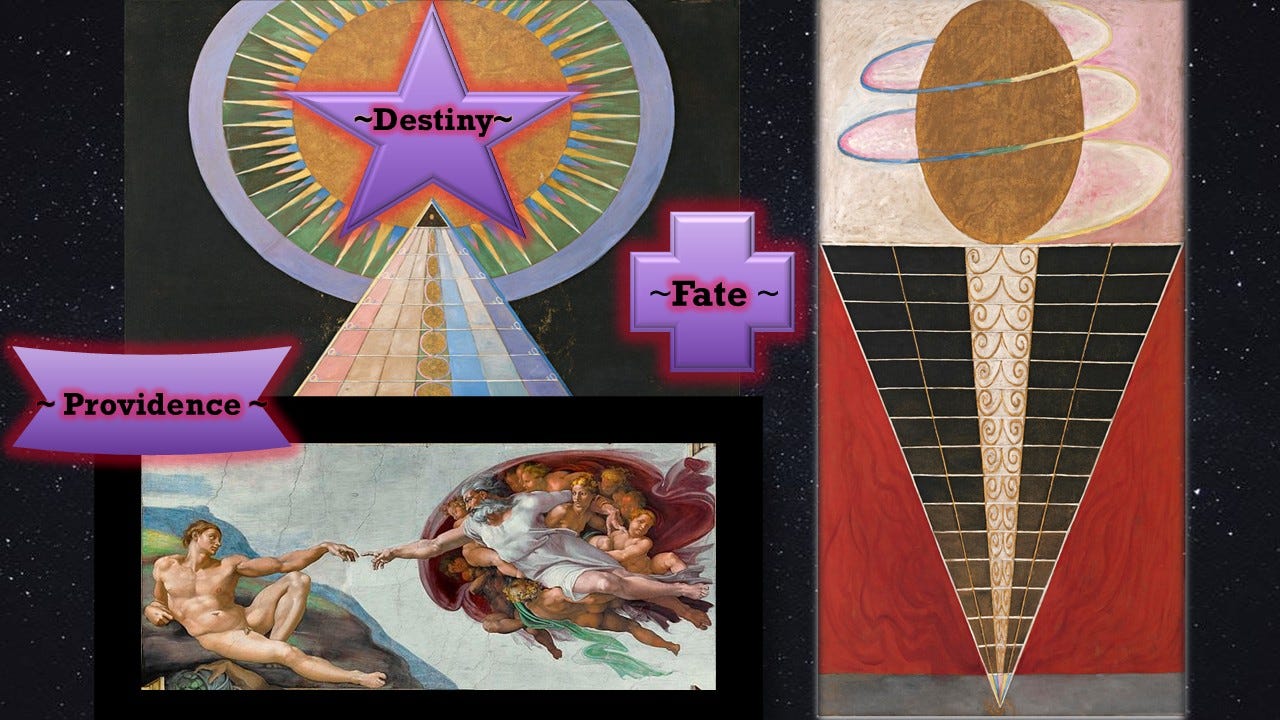
WHAT IS YOUR DESTINY?
From Necessity to Freedom – The Evolution of Human Consciousness - w/ Hazel Archer-Ginsberg
for The Minneapolis Theosophical Society
Monday 10 March 2025 - on ZOOM - 7–9 pm CDT
From the vaporous cleft of Mount Parnassus, and the birth place of Greek Philosophy, to Michelangelo’s Sistine Chapel, and the Holy Grail – From Prophesy to Warning, from Fate to Karma, From Destiny to Free Will.
Hazel Archer-Ginsberg – Interdenominational Minister, Essayist, Presenter, Poet, Anthroposopher - Founding member of the Grand Lodge of (MA) Mysteria Mystica Americana - Cognitive Ritual: ~Confessions of a Modern Rosicrucian, & the ‘I Think Speech’ Podcast - YouTube Video Recordings
Zoom: https://us02web.zoom.us/j/84368789880?pwd=bUI5b3FZcHNoc3NLaXpUbktHejRGUT09
Meeting ID: 843 6878 9880
Passcode: 365495

If you want to support the Biodynamic Farming done on Zinniker Farm, you are invited to become a paid subscriber, with all donations going directly to the farm